
Finding West St. Paul Residents
West St. Paul has no single official roll of its residents. Dakota County's Property Information search is the strongest first stop when an address is in hand. It accepts an address or a parcel ID, called a PID. The county guide suggests typing the building number first, then picking from the suggested addresses. A chosen result highlights the parcel on a map with property information, aerial imagery, and a legal description. It is an address tool, not an owner-name directory. A name search needs a second anchor first. That could be a middle initial, a past address, a family connection, or a date. Then match the record to the question. A deed names the parties to a transfer. A voter result confirms one registration match. A city directory ties a person or business to a single publication year. None of them alone proves a full household or continuous occupancy.
- Normalize a street address with the USPS lookup, then search Dakota County Property Information by address or PID.
- Save the parcel's legal description and the map date before following any land-record lead.
- Use the Minnesota voter lookup only to confirm an individual registration match, not to produce a neighborhood list.
- Search the county's recorded-document route for a grantor, grantee, legal description, or document type when a land transfer matters.
- For an earlier household, compare dated directories, newspapers, cemetery material, or archival collections and cite each source separately.
Note: An address search is a practical first step, but an owner, deed party, and directory listing each answer a different question. Treat them as separate kinds of evidence.
West St. Paul Resident Record Desks
West St. Paul sits inside Dakota County. The county seat is Hastings. Land records live with Dakota County Property Taxation & Records, court files belong to Minnesota's district court system, and elections run through a separate route. The Northern Service Center in West St. Paul handles certain vital-record services. The recorder's own recording work happens at the Hastings Administration Center. Treat each desk as the custodian of one narrow class of records.
Dakota County Property Taxation & Records
1590 Highway 55
Hastings, MN 55033
651-438-4597
Dakota County Property Information
Countywide parcel and tax-property information
Address or PID search
Public online search
Minnesota Elections Lookup
Individual registration confirmation
Statewide route
Online service
The full address-to-parcel method belongs with the West St. Paul street directory. City records work differently. The clerk, the building request form, and the police data form are routing channels, not a citywide resident index.
West St. Paul Property Search Fields
County Property Information is free and deliberately narrow. Its one search box reads “Search Address or Parcel ID.” Address suggestions appear as you type. Choosing one centers that parcel on the map, and the property panel, aerial view, and legal description help confirm the right land record is open. The public map offers no robust owner-name search.
| Field or result | Use | Format or limit |
|---|---|---|
| Search Address or Parcel ID | Find a parcel | Enter an address or PID |
| Address suggestions | Select the matching address | County guide says to begin with the building number |
| Highlighted parcel | Confirm mapped land | Map result, not a survey |
| Property-information panel | Review parcel facts | Check the displayed date and record context |
| Legal description | Carry a land key to recorder research | Useful for RecordEASE and document requests |
The county's online-property-maps page describes printable property cards. It also covers an Interactive GIS Map with about 150 layers, from parcels and imagery to parks, trails, road construction, and floodplains. Each layer answers a different question. None is a legally recorded map or survey. Note: Keep the PID, the legal description, and the date of the map view together when comparing an address across sources.
West St. Paul Records Map
A free parcel map and a fee-based deed index complement each other. Neither replaces the other. RecordEASE is Dakota County's online service for abstract and Torrens records. It searches by legal description, grantor, grantee, or document type. Its abstract computer index reaches back to July 8, 1993. Older, different, or inaccessible material may call for a county copy request, a visit, or a separate archival collection.
| Route | What it can show | Access | Important limit |
|---|---|---|---|
| Property Information | Parcel, address, map, legal description | Free address/PID search | Not a robust public owner-name search |
| RecordEASE | Recorded instruments and document images | Login and transaction fees | Deed party is not proof of occupancy |
| County copy service | Recorded document copy | Request or visit | Certified copies differ from ordinary copies |
| City property-history form | Existing permit or inspection material | Address-keyed request | No public permit case-search was located |
Occasional RecordEASE users pay $5 per session under the county's listed terms. Each search costs $1. Each document costs $2. A deed copy can be free. Other copies run $1 per page, and certified copies cost $10. Those prices come straight from the county. Use the county document-copy route when a portal result is not enough.
West St. Paul Data Requests
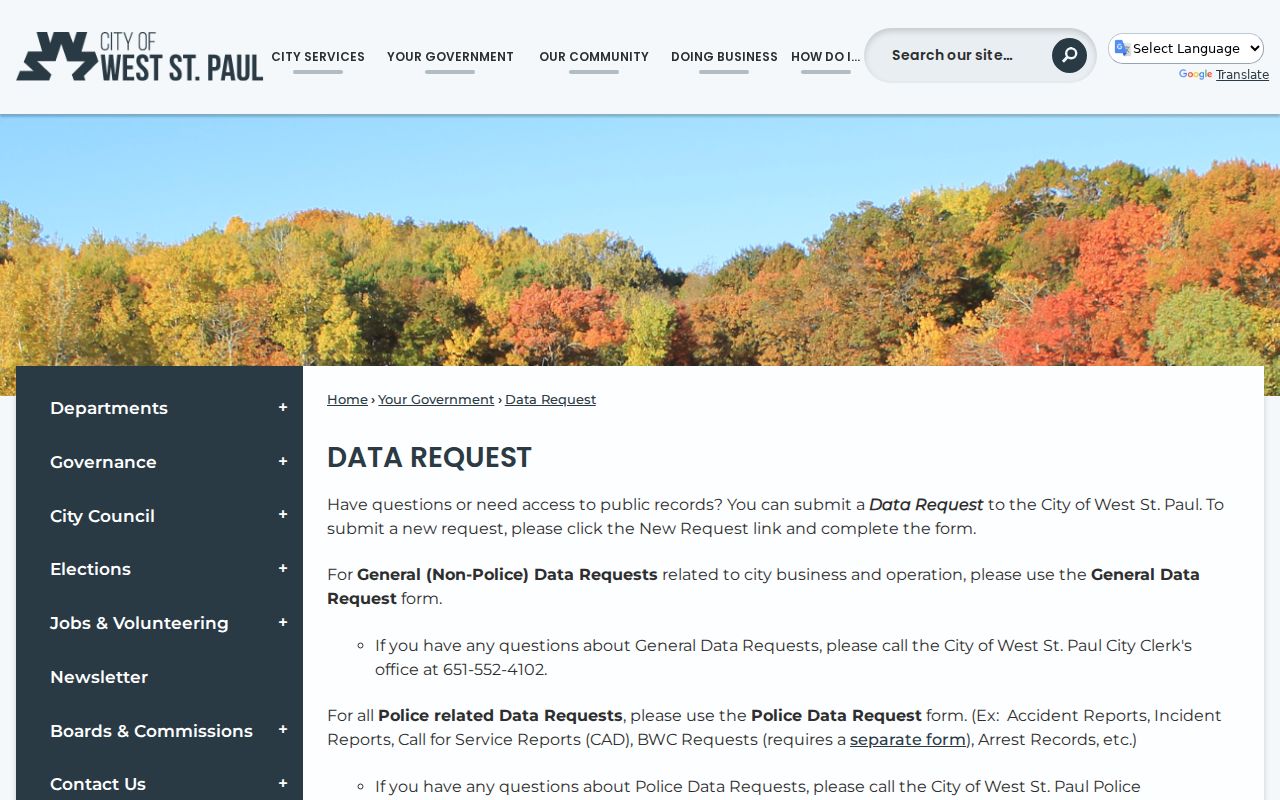
West St. Paul splits its data requests across separate forms. The forms cover general city data, police data, and building or property-history needs. A focused request should state the address or PID, the record type, and the date range. It should also name the format wanted. Minnesota's Government Data Practices Act, Minn. Stat. chapter 13, presumes public access. It still permits withholding of private, confidential, sealed, expunged, or otherwise restricted data. A public entity also need not build a new analysis or profile on request. The West St. Paul data-request page lays out the request types and the clerk and police pathways. City Clerk Elke Johnson is listed in the city directory at 651-552-4102. A property-history request runs through the city's Building form. That form asks for an address and a date range. It also wants a description of the records sought. Police material follows its own rules for classification, identification, release, and pickup. The city property-history request form is an address-keyed route. It is not a portal that names every occupant or complaint.
That routing distinction matters. It helps a requester name the right custodian instead of asking one office to decide what another office holds.
Current West St. Paul Resident Sources
No single current source behaves like a true residents directory for West St. Paul, so each line of evidence does a different job. Parcel records link a situs address and parcel number to county property rolls. The voter lookup only confirms one person's registration. Recorded instruments name the parties to land documents. The municipal staff directory covers city officials and departments, not residents. Minnesota's state public registrant search has location controls. Disclosure law governs it. The state never built it as a general resident directory.
| Source | What it identifies | Keeper | Access |
|---|---|---|---|
| Parcel/property information | Parcel, situs, map and property fields | Dakota County | Free address/PID search |
| Voter registration confirmation | Individual match and election geography | Minnesota Secretary of State | Individual lookup; lists are controlled |
| Recorded-document index | Grantor, grantee and instruments | Dakota County Property Taxation & Records | RecordEASE or copy request |
| City staff directory | Public civic contacts | West St. Paul | Free online categories |
| Public records request | Existing city data that may be public | City custodian | Chapter 13 request and classification review |
Treat each source as one thread, not a household list. A single named person is a different question. The West St. Paul resident lookup answers it by combining registration checks, court context, vital-record leads, and historical sources.
West St. Paul Voter Limits
Minnesota's voter-registration lookup confirms an individual match. It uses a name, birth date, and a ZIP code, county, or address. The system updates nightly. That reliability serves a voter checking personal registration. But the tool cannot download residents by street. Minn. Stat. § 201.091 governs voter-list products, with certification, fee, and permitted-use rules attached.
Protected addresses deserve separate handling. Minnesota Safe at Home gives qualifying participants a substitute address. Other data may sit behind chapter 13, court confidentiality rules, vital-record law, or federal motor-vehicle-record limits. A missing result can point to a restricted field or the wrong system. It does not point to a conclusion about a person.
Lawful use. West St. Paul records are for personal, lawful research. Do not use an address, map, court record, or request process to stalk, harass, or harm another person.
West St. Paul Court Record Checks
Minnesota Court Records Online is the state route for district-court material. It is known as MCRO. The system covers cases, documents, hearings, and judgments. A court name result always needs context. Record the case number first. Add the court and county, filing date, category, parties as shown, document title, disposition or judgment field, and access date. A shared surname proves nothing. Case category alone cannot establish an outcome or a person's identity.
MCRO's public case search offers name, case, citation, and attorney search paths. Filters cover date range, county, category, and status. The courts' name-search guidance suggests trying middle-name variations, initials, punctuation changes, wildcards, and the Sounds Like option as leads. Remote material stays incomplete for some case types. Courthouse terminals may display more permitted local material without overriding restrictions.
The Minnesota court interface presents separate search routes rather than one general people list. Requesting a permitted copy? Use the case number with the court administrator. The same goes for asking about a locally held file.
Note: A remotely absent case item may be restricted or unavailable online, rather than nonexistent.
West St. Paul Vital Record Paths
Birth, death, marriage, and divorce records do not share one custodian. The Minnesota Department of Health coordinates birth and death records. Dakota County service centers issue certain local products and marriage licenses, and a divorce decree belongs with the district court that granted it. Minn. Stat. § 144.225 sets vital-record disclosure rules. Certified copies carry eligibility conditions. A public birth record may have a noncertified route, and a noncertified informational death record is public.
Start with the Minnesota Department of Health vital-records service. Identify the record type and product you need there. For local service availability, check Dakota County's service-center information. An index works as a lead; it is not a certified document. Historical research can then move to MNHS People Records, directories, newspapers, or cemetery material where the collection fits the date.
Earlier West St. Paul Resident Directories
Historical work needs its own shelf. Saint Paul Public Library's digitized city directories cover 1856 through 1922, with later volumes on microfilm or in print at Central Library. Those volumes are not a complete West St. Paul run, so present them carefully. A closer local lead is the Minnesota Historical Society Dakota County telephone-directory finding aid, which begins in 1928, includes West Saint Paul telephone directories, and describes 1,237 volumes and 226 microfiche.
A directory entry may list an alphabetical resident or business name, street address, occupation or business type, and later telephone information or symbols. A street index, householder index, or criss-cross directory flips the approach by arranging listings around addresses. Confirm coverage with the city-and-year shelf detail before assuming a volume holds a particular street.
- Parcel
- A mapped unit of land with a county identifier and legal description.
- Index
- A finding tool that points to a record or image; it is not always the full record.
- Criss-cross directory
- A reverse directory arranged by address instead of only by name.
- Situs address
- The property's physical location, which can differ from a mailing address.
The West St. Paul city directory is the dedicated route for seeing how entries, year gaps, telephone volumes, newspapers, and archival requests fit a household timeline.
West St. Paul Postal Identity
ZIP 55118 is commonly used for West St. Paul city addresses. Yet USPS can label the same service area "Saint Paul." The official West Saint Paul Post Office listing itself carries a Saint Paul postal address. A postal city field is not a municipal-boundary decision. When jurisdiction matters, confirm the location with the city boundary and Dakota County parcel GIS. Search both West St. Paul and West Saint Paul in historical tools.
The county property map, city maps, and the legal description each add a geographic layer. Each one differs. That distinction matters in the Smith Avenue and Dodd Road corridor, which carries cross-city context. Postal labels, wards, neighborhoods, and parcels should never be collapsed into one record field.
West St. Paul Record History
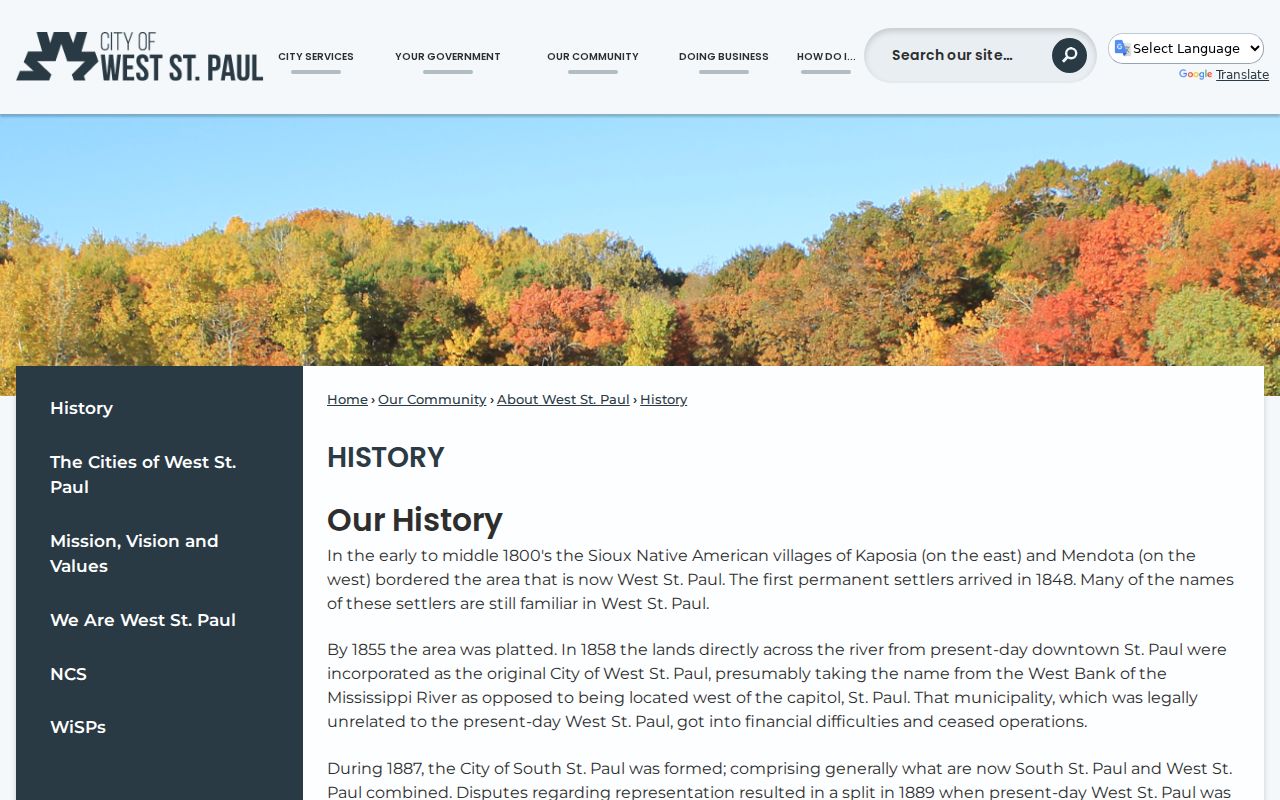
The name West St. Paul carries more than one civic meaning. Settlers arrived for good in 1848, and the land was platted in 1855. An earlier city under that name incorporated in 1858 and dissolved by 1862. Today's West St. Paul dates to 1889, after township shifts and annexations reshaped the map. A city charter followed in 1907, and a 1962 amendment brought in the city-manager system. Any historical record bearing the West St. Paul name needs its year and its government context weighed before you trust it. The official West St. Paul history lays out that chronology clearly, which helps separate one municipal era from another when old directory or deed entries turn up.
That layered past is exactly why a deed, map, or library entry from West St. Paul should carry its date and legal geography rather than a modern postal label. Context, not the name alone, tells you which government produced the record.
West St. Paul Record Currency
No single refresh schedule governs West St. Paul's online records. MNVotes posts updates nightly. RecordEASE displays its own indexing dates, and city forms can be revised at any point. Library databases and branch hours shift too, which matters for anyone planning a records visit. One example: Dakota County's library advisory minutes describe a Wentworth renovation running from April 2025 into April 2026, so service details belong with the live library page rather than an aging notice. For civic contacts, West St. Paul's municipal directory is a practical route. It is not, however, evidence that a general resident database for the city exists.
Look at the date a source displays and the purpose it serves. That habit keeps a live screen, an archived sample, and a historical volume from being mistaken for equal evidence about West St. Paul.
West St. Paul Deed Records
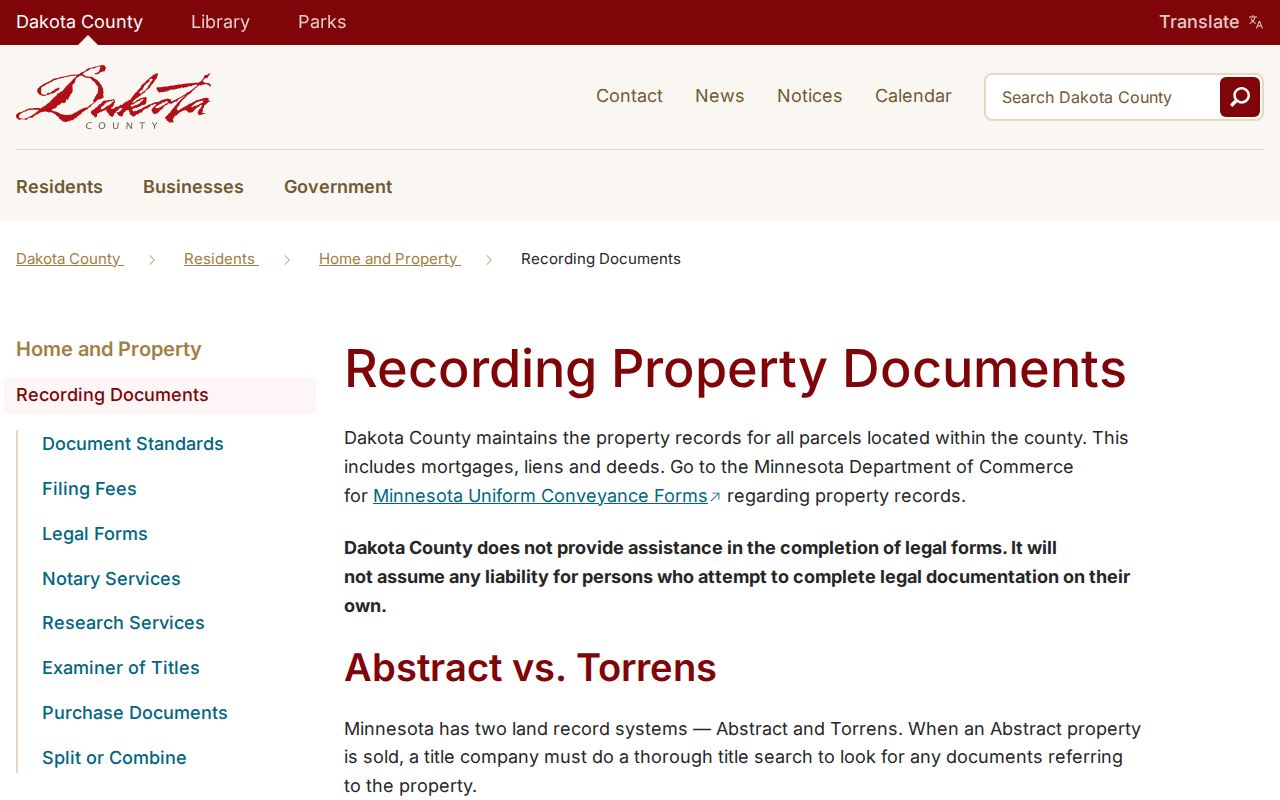
A deed records a legal transfer, not a change of address. Grantor and grantee are parties to an interest in land. The recording date fixes when the instrument entered the county's official trail. For West St. Paul property, start with the parcel map. Move to the legal description, then to the recorder index. Finally request a copy before placing the document on a timeline. Resist blending sources. A tax-list name says one thing. A parcel owner, a deed party, and a residents directory entry each say something different. Dakota County's recording page covers the Abstract and Torrens systems and routes recordings to Hastings.
For estate and family-history work, that separation matters most. A West St. Paul transfer can anchor a trail of ownership without ever proving who lived in the house.
West St. Paul Research Sources
Modern portals leave real gaps, and West St. Paul's libraries and historical groups fill them. Dakota County Library offers genealogy resources, newspapers, Minnesota Reflections, and licensed research tools. Some of those tools are limited to in-library use. The Dakota County Historical Society holds more than half a million records. Those holdings span church, cemetery, and census material. Staff there assist with obituaries, marriage announcements, and Catholic church material. Its cemetery database is a solid lead for dates and places. Keep the caveat in mind, though. A burial record is not proof of residence in West St. Paul. Dakota County Library's research categories map out the local-history routes. They also cover the genealogy routes open through the system.
When a digital index runs thin, narrow the ask. Request a bounded year, a street, a name variant, or a specific collection and record type rather than a broad profile of a West St. Paul resident.