
West St. Paul City Directory Collections
West St. Paul does not have a verified, complete official city-directory run presented as one collection. The most useful shelves are regional and must be checked by city and year. The Saint Paul Public Library city-directory guide provides digitized St. Paul volumes from 1856 through 1922, while its Central Library holdings include 1856 to 1859 on microfiche, 1863 to 1935 on microfilm, and print volumes from 1938 onward. Those St. Paul materials are historical regional sources, not proof of uninterrupted West St. Paul coverage. Ask staff whether a West St. Paul, West Saint Paul, South St. Paul, or suburban volume exists for the needed date.
| Collection | Years | Where held | Access |
|---|---|---|---|
| St. Paul digital directories | 1856-1922 | Saint Paul Public Library and the digital collection | Online pages; historic St. Paul collection, not a claimed full West St. Paul run |
| Later Saint Paul and suburban directories | 1856-1859 microfiche; 1863-1935 microfilm; 1938-present print | Saint Paul Public Library Central Library | Ask staff for West St. Paul or South St. Paul coverage; reader and copying limits apply |
| Dakota telephone directories | 1928 onward | Minnesota Historical Society finding aid | Open research; collection lists 1,237 volumes and 226 microfiche, including West Saint Paul |
| Dakota historical records | Dates vary | Dakota County Historical Society | Search and research help for cemetery, church, census, obituary, and regional material |
The Minnesota Historical Society Dakota telephone-directory finding aid is the stronger local lead for a subscriber or address after 1928. It specifically includes West Saint Paul and records city, year, and shelf detail. The Dakota County Historical Society research route can then supply complementary cemetery, church, census, or obituary leads, but a burial result is not proof that someone occupied a particular West St. Paul address.
West St. Paul Directory Access Routes
Catalogs and shelves matter as much as the alphabetic listings. The Dakota County Library research catalog identifies genealogy, newspaper, Minnesota Reflections, and licensed tools, some of which require a library computer or qualifying access. Wentworth Library is the local branch, but library service and access arrangements can change, so the current county library page should settle hours and availability. For an archival search beyond the catalog, MNHS research services accept requests for city directories, telephone books, newspapers, yearbooks, court files, and other records.
The Minnesota Historical Society offers a separate city-directory search request for one individual or business in up to five years of one city. The order page lists a $20 charge for directory and telephone-book searching, including a $5 nonrefundable processing fee, with email scans and a usual three-to-four-week turnaround that can extend to 12 weeks. Holdings can be incomplete. The service is a useful escalation when an exact shelf or locality is unclear, not a promise that a name appears in every year.
The Dakota County Library research catalog is shown below because its categories help separate open collections from resources that need library access.
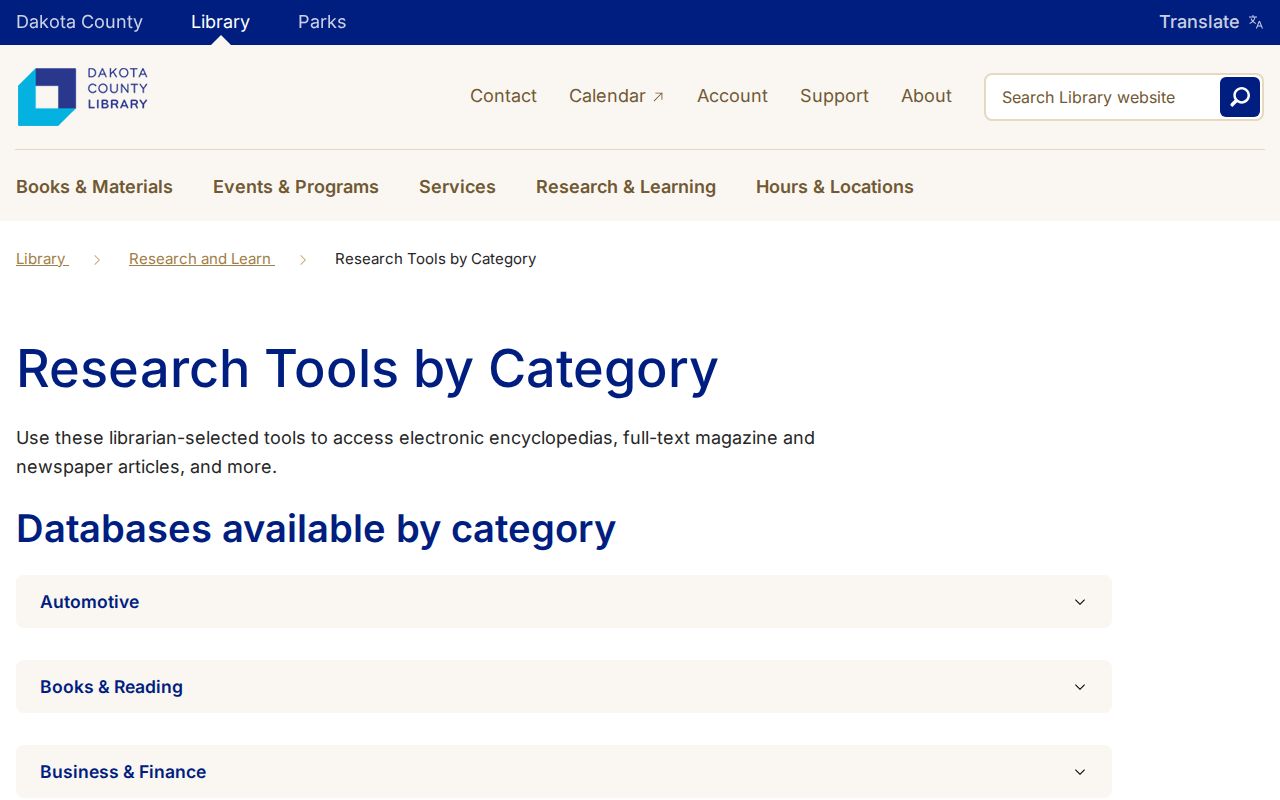
Use the catalog to identify a source type first, then ask for the exact city label, date range, and access condition instead of assuming a regional title includes West St. Paul.
Read West St. Paul City Directory Entries
A city directory entry is an editorial snapshot from one publication year. The SPPL collection description says older alphabetical entries can show a person or business name, street address, and occupation or business type. Later formats added street indexes, house numbers, homeowner notation, spouse conventions, telephone indicators, and telephone-number sections. Read the key printed in the same volume before treating any symbol as evidence. A homeowner mark, for example, is a publication convention and does not replace a deed or tax record.
| Name | Alphabetic entries may identify a person, business, or household head; later volumes can list more adults. |
|---|---|
| Street and number | The address places the entry in that edition; house numbers became part of the documented directory chronology in 1885. |
| Occupation or type | An occupation or business type can distinguish similar names, but it is limited to what the publisher printed. |
| Spouse and homeowner notation | 1929 conventions can include wives' names and a dotted-circle homeowner mark; neither one is title proof. |
| Telephone notation | A bell marks telephone subscribers in the 1940 convention, while later volumes added phone-number structures. |
- Criss-cross directory
- A reverse section arranged by street and number, used to move from an address to a listed occupant or subscriber for that edition.
- Householder index
- An alphabetic or address-focused aid that points to the person the publisher treated as the household reference.
- Abbreviation key
- The printed explanation for symbols and shortened words in that volume; photograph or note it before interpreting an entry.
Directory entries also have blind spots. They can omit minors, transient people, people not treated as household heads, and addresses outside the publisher's coverage. An entry supports only what that edition presents, on that date.
West St. Paul Directory Conventions
The 1929 directory is especially useful because its documented conventions change how an entry should be read. A street index is available, wives' names may appear, and a dotted circle identifies a homeowner. South St. Paul has its own street index in that year. By 1933, the collection description says all adults were included; by 1940, telephone subscribers received a bell mark. The 1948 volume drops the South St. Paul street directory, and the later sequence adds a South/North Suburban volume in 1956, telephone numbers in the street index in 1961, and a separate telephone-number section in 1964.
That progression is a West St. Paul research quirk, not a reason to merge places or years. A street-index hit gives a date-specific lead. The alphabetical portion may supply a name, spouse, occupation, or business type. A deed, tax list, census line, permit record, obituary, or newspaper item can test the lead. Keep the evidence labels separate when building a household timeline.
West St. Paul City Directory Images
The digitized directory collection is the online entry point linked by SPPL for historic St. Paul directories. It is valuable for testing a name, street relationship, and period convention. It does not establish that every volume is a West St. Paul volume, so record the volume title, year, page, and whether the entry appeared in the alphabetic or street section.
A scan should preserve enough context to be checked later: the collection name, directory year, page or image, city label, and the symbol key when a symbol affects the reading. This prevents a search result from being mistaken for an unqualified household claim.
West St. Paul Telephone Directories
Telephone books are not interchangeable with city directories. The MNHS Dakota County telephone-directory finding aid begins in 1928 and describes 1,237 volumes plus 226 microfiche. Because it includes West Saint Paul, it offers a specific city-and-year confirmation route when the broader St. Paul collection is uncertain. Ask for the exact locality, year, and shelf location, and save the collection citation with any resulting page reference.
A telephone listing identifies a subscriber or listing relationship at a point in time. It may miss households without service, unlisted numbers, minors, and people listed under another name. Telephone information should therefore corroborate, not replace, a dated city directory entry or a historical record from an appropriate custodian.
Trace West St. Paul Directory Households
For family history, begin with the closest available year and work in both directions. The federal census can fill larger gaps, but individual schedules follow a 72-year access rule. The National Archives census guidance identifies 1950 as the latest public population census at the time of the research, while later schedules remain restricted. Directory evidence can bridge the years between censuses when the city label and address have been checked.
- Search the alphabetic entry for the person or household in the closest confirmed directory year and note the spelling, address, and any printed symbols.
- Check the street or criss-cross section when that edition has one, using the street name and number in the order stated by the volume.
- Repeat in nearby years, recording a move, changed spelling, spouse notation, or disappearance as a source observation rather than a conclusion.
- Pair each dated entry with the closest available census year, then compare city-label variants such as West St. Paul and West Saint Paul.
- Use a newspaper, obituary, tax list, or recorded instrument to test a move or identity question before joining records for similar names.
A disappearance can mean a move, death, a changed listing, omitted coverage, or an unlisted household. The SPPL house-history guide recommends directories alongside newspapers, permits, photographs, historic surveys, and other local-history sources. When the question shifts to a current parcel or recorded land trail, use the West St. Paul streets reference rather than treating a historical listing as a current address record.
West St. Paul Directory Name Variants
West St. Paul records require close attention to place names. The current city incorporated in 1889, while an earlier municipality using the name ended in 1862 and South St. Paul formed in 1887. The City of West St. Paul history and its longer municipal chronology help distinguish those government labels. Search West St. Paul and West Saint Paul, then evaluate a Saint Paul postal label as a variant, not as a municipal conclusion.
The postal name can complicate catalog searches. ZIP 55118 may carry Saint Paul in USPS records even when a local address serves West St. Paul. A directory, tax list, cemetery town field, or newspaper heading can offer context, but none alone proves every part of a household story. Confirm jurisdiction with a dated city boundary, parcel legal description, or the relevant custodian when the distinction affects the research question.
West St. Paul Directory Research Requests
When a shelf, microfilm reel, or city label remains uncertain, ask for an existing record rather than an open-ended profile. Under the Minnesota Government Data Practices Act request guidance, a request should name the responsible entity, record type, date range, known address or parcel detail, and desired format. The law does not require an agency to create a new analysis. For historical material, a bounded request gives DCL, DCHS, or MNHS a usable starting point.
Access channels are complementary: digital SPPL pages for early regional volumes, Central Library microfilm and print for later holdings, the MNHS telephone finding aid and paid search service for city-and-year confirmation, Dakota County Library tools for licensed research, and DCHS assistance for local historical context. Treat restricted, missing, or unlocated material honestly. A record not located in a searched collection and date range is not proof that it never existed.